
Games, Play, and Activities for Children
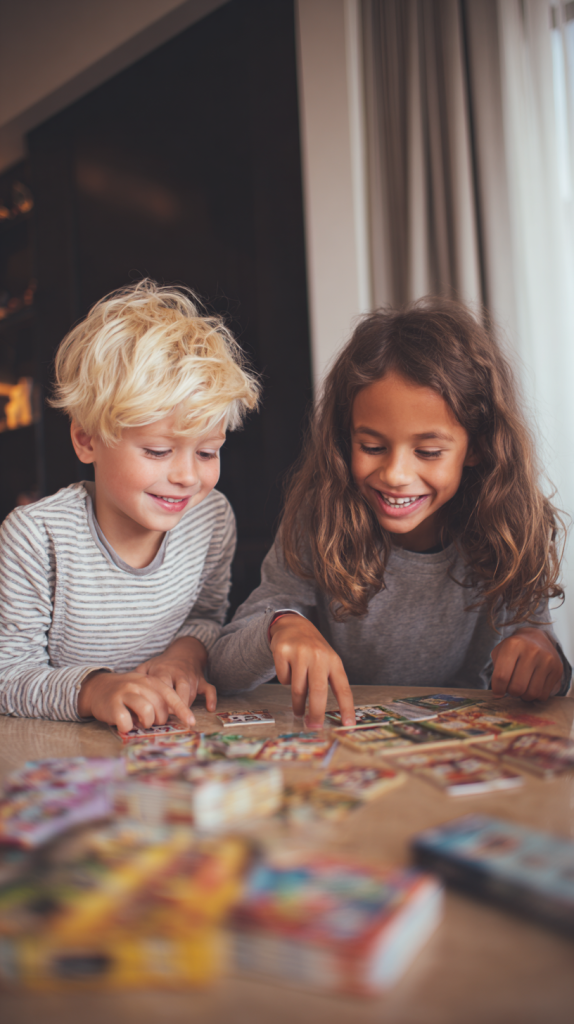
Games, play, and activities are important parts of everyday life in kindergarten and school. Through these experiences, children can learn new skills, develop socially, and explore the world around them. As child care and youth workers, we often plan different activities, but children also learn a lot through free play.
Play is usually free and imaginative. Children choose what they want to do and how they want to play. For example, children may play family, build with blocks, or pretend to be doctors, teachers, or shopkeepers. This type of play helps children develop creativity, language, and social skills. They learn to cooperate, share, and solve problems together, and we can observe how they express their ideas and feelings through play.
Games are activities with rules. Children need to follow the rules while they play. Examples of games we have in kindergarten and school are hide and seek, tag, ball games, hopscotch, and dodgeball. These games help children practice taking turns, understanding rules, and working as a team. They also develop physical skills such as running, throwing, and balancing.
Activities are often planned and guided by us. In both kindergartens and schools, we offer activities such as drawing, painting, arts and crafts, cooking, singing, storytelling, and outdoor trips. These activities support children’s learning and development. For example, creative activities can improve fine motor skills and concentration, while outdoor activities help children explore nature and stay physically active.
When we plan a game, play, or activity, we need to think about the children’s age, safety, and learning goals. We also prepare the necessary materials and explain the rules clearly. This way, every child can join, learn, and enjoy the activity.
Vis ordliste
an experience (en erfaring) = something that happens to you and that you learn from
a skill (en ferdighet) = something you learn to do well, for example running, drawing, or speaking
social skills (sosiale ferdigheter) = skills for communicating and working well with other people
to develop socially (å utvikle seg sosialt) = to learn how to interact and be with other people
to explore (å utforske) = to look at, talk about, or try something in order to learn something new
imaginative (fantasifull) = able to use imagination and create ideas or stories
a shopkeeper (en butikkeier) = a person who owns a shop and sells things
creativity (kreativitet) = the ability to create new ideas, drawings, stories, or things
to cooperate (å samarbeide) = to work together with other people
to express (å uttrykke) = to show or communicate thoughts, ideas, or feelings
hide and seek (gjemsel) = a game where one person searches for others who are hiding
tag (sisten) = a game where one child runs after others and tries to touch them
ball games (ballspill) = games where children play with a ball
hopscotch (hoppe paradis) = a game where children jump on one foot between squares on the ground
dodgeball (stikkball) = a game where players throw balls and try to hit others without being hit
to take turns (vente på tur) = to do something one after another
to throw (å kaste) = to send something through the air with your hand
to balance (å balansere) = to keep your body steady without falling
to draw (å tegne) = to make a picture with a pencil, pen, or crayon
to paint (å male) = to make a picture using paint and a brush
arts and crafts (kunst og håndverk / forming) = creative activities like drawing, cutting, gluing, or making things
storytelling (fortelling / å fortelle historier) = telling stories to children
outdoor trips (turer ute) = activities where children go outside, for example to a forest or park
development (utvikling) = the process of growing, learning, and becoming better at things
a creative activity (en kreativ aktivitet) = an activity where children make or create something
fine motor skills (finmotorikk) = small movements with hands and fingers, for example drawing or cutting
to improve (å forbedre / bli bedre) = to become better at something
concentration (konsentrasjon) = the ability to focus on something for a longer time
a learning goal (et læringsmål) = something children should learn or achieve
necessary (nødvendig) = something that is needed
clearly (tydelig) = in a way that is easy to understand
Vis kilder