
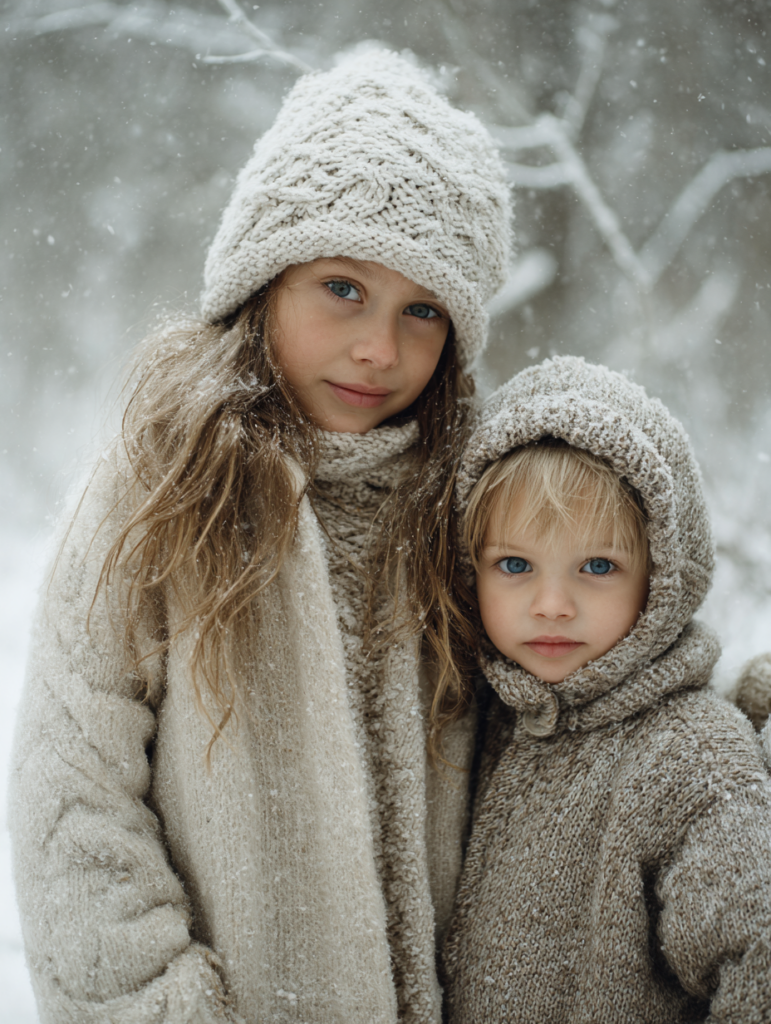
Winter clothes for children
As a child and youth care worker, it is important to understand why children need proper clothing. Good clothing helps children stay warm, dry, and comfortable when they are outdoors. Small children cannot control their body temperature as well as adults, and they lose heat more quickly, especially in cold, windy, and wet weather.
The most important rule for winter clothing is using layers. Dressing in layers makes it easier to adjust clothing if a child becomes too warm or too cold.
The innermost layer should be wool. Wool helps keep warmth close to the body, even when it becomes damp.
The middle layer is often fleece, which gives extra warmth. The outer layer should protect against wind, rain, and snow. A snowsuit should be waterproof and breathable, and big enough to fit clothes underneath.
Children should wear a hat, mittens or gloves, warm boots, and socks. A neck warmer is safer than a scarf in kindergarten and school.
Vis ordliste
clothing (klær) = clothes that people wear
outdoors (utendørs) = outside, not inside a building
body temperature (kroppstemperatur) = how warm or cold the body is
layers (lag) = several pieces of clothing worn on top of each other
adjust (tilpasse) = to change something to make it better
the innermost layer (det innerste laget) = the clothing closest to the skin
wool (ull) = a natural material from sheep that keeps you warm
warmth (varme) = the feeling of being warm
middle layer (mellomlag) = clothes you wear over your inner clothes to keep warm
fleece (fleece) = a soft, warm synthetic fabric
the outer layer (ytterlaget) = the clothing worn on the outside
a snowsuit (vinterdress) = a warm suit for winter weather
waterproof (vanntett) = keeps water out
breathable (pustende) = lets air and moisture move out
underneath (under) = below or under something
a hat (lue) = clothing worn on the head
mittens (votter) = gloves with one section for the thumb and another section for the other four fingers together
gloves (hansker) = handwear with one space for each finger
boots (støvler/sko) = strong shoes for cold or wet weather
socks (sokker) = clothing worn on the feet inside shoes
a neck warmer (hals) = clothing worn around the neck
a scarf / scarves (skjerf) = long fabric worn around the neck
Vis kilder
NAFO – Nasjonalt senter for flerkulturell opplæring. (2012). Kle barna riktig i vinterkulda [Winter clothing guide for children]. Morsmål.no. https://morsmal.no/kle-barna-riktig-i-vinterkulda/#vinterplakat